
Cathedral thinking
A challenge to think beyond ourselves

Wealth, status, pride
are their own ruin.
To do good, work well, and lie low
is the way of the blessing.
That’s Lao Tzu in the Tao Te Ching, as translated by poet Ursula Le Guin. Le Guin tells us that the Tao Te Ching was “probably written about twenty-five hundred years ago, perhaps by a man called Lao Tzu, who may have lived at about the same time as Confucius.” I can’t pretend to be able to say what it’s about. But it is wise. I keep it on my nightstand and open it randomly every now and then. Every page is a window to an internal challenge.
I just read the page that includes the lines in italics above. “Work well and lie low,” says Lao Tzu. I thought, “What does it mean to lie low? Does it mean to not speak up? Does it mean to accept one’s lot?” Read that way, it made me chafe. Suffragettes didn’t lie low. Civil rights leaders didn’t lie low. I was confused.
While I struggled with that line, I remembered an article I read in last week’s New Yorker about the artists Christo and Jeanne-Claude (June 1, 2025, Talk of the Town, p. 15). You may remember them best from the Gates project, which transformed Central Park in 2005. Jeanne-Claude died in 2009, and Christo died in 2020. Now, Christo’s nephew, Yavachev, is working to realize projects they planned but never completed. In describing this work, Yavachev mentioned the concept of “Cathedral Thinking,” which he recalled hearing from the singer Bono. He defined Cathedral Thinking as “when you start something that you know you cannot finish.” I wondered if this could be connected to Lao Tzu’s idea of lying low. Because building medieval cathedrals took hundreds of years, the people who planned them never saw the finished product. They worked on something bigger than they were - even bigger than the entire length of their lives. They worked hard and contributed to ongoing life. They were part of an endless stream of people working hard and doing their best. So thinking beyond oneself is now sometimes thought of as Cathedral Thinking.
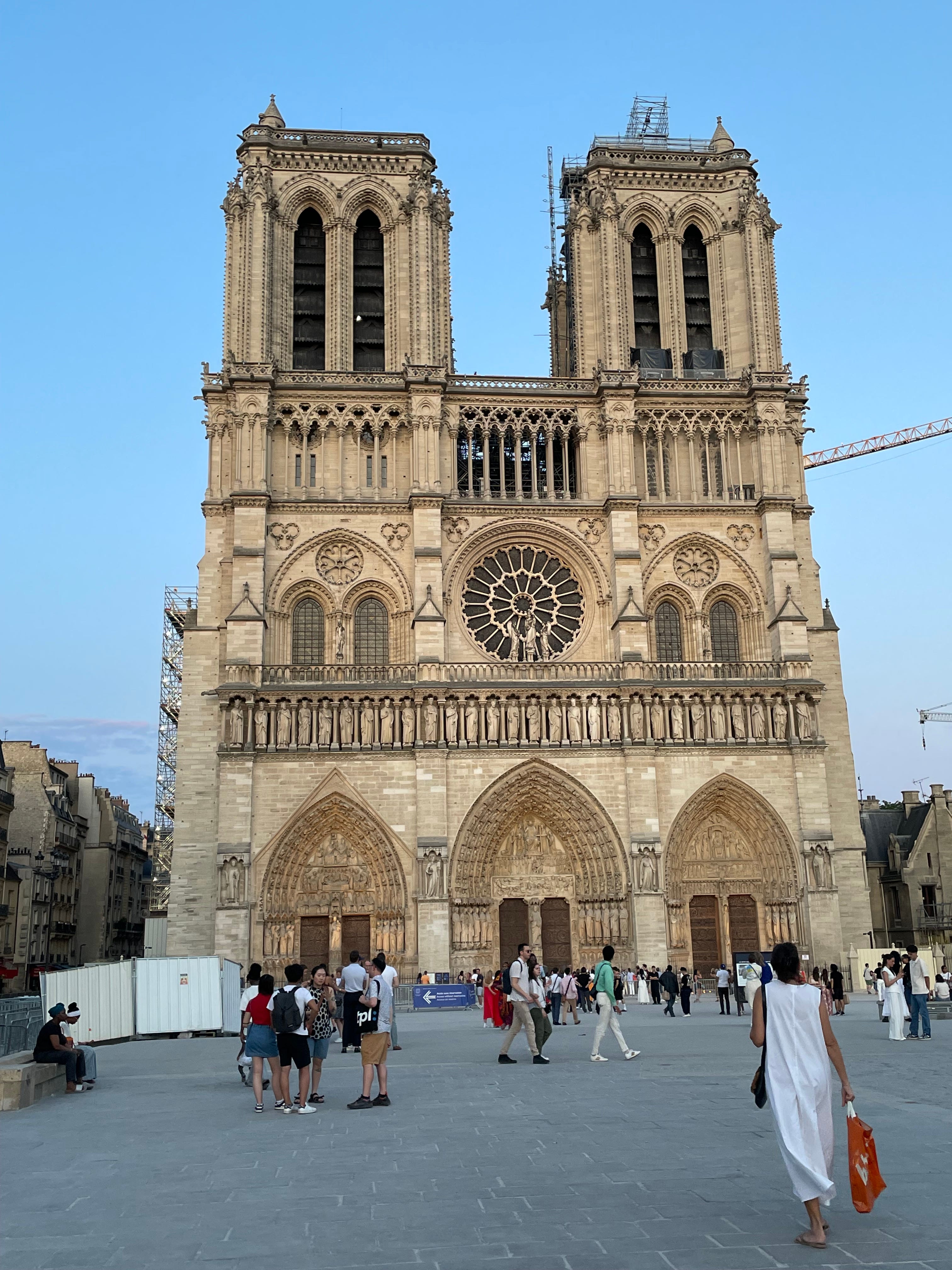
I was struck by that idea. I thought about striving to be a Cathedral thinker. I might start something and never see the end, or I could see the product of something I didn’t start. It could also be that what I work on won’t have a beginning or an end. Caring for other people. Trying to make improvements to the world. These missions started long before I was born and will continue long after I die. It takes a lot of humility to accept that you are just part of the process.
I thought about how the concept of Cathedral Thinking could be helpful in psychotherapy. It’s a way of zooming out of the pettiness of things like claiming credit and vying for ownership. Believing that a project or mission could take a long time to complete might free people to innovate in creative ways. It might also help them feel part of the flow of life. Lao Tzu called that “the Way.”
Perhaps understanding that you are just part of the Way is what it means to lie low. The idea of Cathedral Thinking helped me get there. Try opening a page of the Tao and see where you get.
See you next week,
Deborah
Thank you for this beautiful way of accepting our brief time on earth. Hopefully we can value what we do with it, honor those who came before and shaped it, and those who follow and build upon it too. Brenda
Makes me think about the values in medical research that I respect the most. Even if one gets negative results, it is still part of a larger process of generating more knowledge and developing more questions to be answered by others